
What to Wear for Umrah (Women): Outfit Guide and Packing List

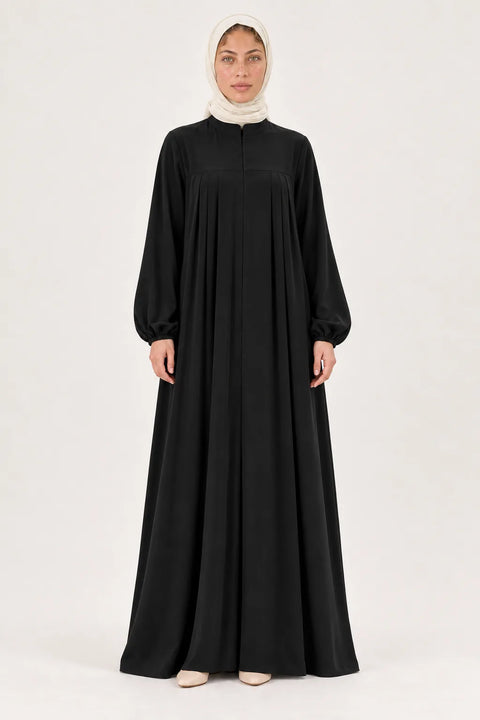
Short answer: what to wear for Umrah as a woman is simply your ordinary modest clothing, worn as ihram: a loose, opaque, ankle-length abaya, prayer dress or jilbab, with a hijab or khimar covering the hair, neck and chest, and the face and hands uncovered. There is no required colour. Pack two or three plain outfits in breathable fabric, six to eight pin-free hijabs, comfortable shoes with socks, and only unscented toiletries.
Working out what to wear for Umrah as a woman is simpler than it first looks. There is no special uniform to buy. What matters is that your clothes are modest, comfortable for hours of walking and prayer, easy to wash in a hotel sink, and suited to the weather in Makkah and Madinah in the month you travel.
This guide explains ihram for women in plain terms, compares the outfits that work best, and ends with a complete women's Umrah packing list you can tick off before you close your suitcase.
Ready to pack? Browse our Umrah & Hajj clothing edit, or go straight to white and cream abayas.
What ihram means for women
Ihram is the sacred state a pilgrim enters before performing Umrah, marked by an intention (niyyah) made at or before the miqat. For men it comes with two white unstitched cloths. For women, the widely held view is that there is no special ihram garment: you enter ihram in your normal modest clothing.
In practice, that means clothing that covers the whole body except the face and hands, is loose enough not to show your shape, and is thick enough not to be see-through. Stitched clothes, sleeves, trousers and ordinary hijabs are all fine.
What women usually avoid while in ihram
- Perfume and scented products, on the body and on clothing. Many pilgrims also switch to unscented soap, shampoo and deodorant for the whole trip.
- A niqab or gloves, according to the majority of scholars. Many scholars allow a woman to let a scarf fall loosely over her face when she is near unrelated men.
- Cutting hair or nails until the rites are complete. At the end of Umrah, women trim a small amount of hair, about a fingertip's length.
This is general guidance, not a ruling. Details differ between schools of thought, so check with a scholar you trust, and read the official pilgrim information on Nusuk, the Saudi platform for Hajj and Umrah, before you travel.
Umrah outfit basics: colour, fabric and coverage
Colour
Women do not have to wear white for Umrah. White, cream, beige, grey, soft pastels, navy and black are all common. Light colours feel cooler in the sun and look calm in photos. Darker colours hide dust and marks on long travel days. A good compromise is one light outfit for the rites and one darker outfit for travel.
Keep patterns and embellishment minimal. Sequins, heavy embroidery and shiny fabrics draw attention and get uncomfortable in crowds. Plain clothes help you blend in and stay focused.
Fabric
Choose breathable, opaque fabrics you can rinse and dry overnight. Cotton, jersey, crepe, nida and linen-look weaves all work well. Hold each piece up to a window before packing: if you can see your hand through it, add a layer underneath or leave it at home. Our guide to what to wear under an abaya covers slips and inner dresses for lighter fabrics.
Coverage and fit
Check three things in front of a mirror. The hem should still cover your ankles when you go down into sujood. The sleeves should stay at your wrists when you raise your hands. The neckline should not gape when you bend forward. Loose sleeves with cuffs, a generous length and a relaxed cut solve all three. If you are unsure of your size, the size guide gives lengths and chest measurements.
Tip: Do a test prayer in every outfit before you pack it. A few rakahs at home will show you straight away whether a hem rides up, a sleeve slips or a hijab loosens.
Prayer dress vs abaya set vs jilbab and khimar
Most women pack a mix of the three main outfit types. Each works slightly differently, so here is how they compare for Umrah.
| Outfit | Best for | Good to know |
|---|---|---|
| Prayer dress (one-piece, hood or attached hijab) | Tawaf, sa'i and long prayers in the Haram | Slips over any clothes in seconds. Nothing to pin, nothing to slip. |
| Abaya set (abaya with inner dress, trousers or hijab) | Travel days, hotel to mosque, ziyarah in Madinah | Most versatile. Mix the pieces to make several outfits from one set. |
| Jilbab or khimar over an abaya | Full coverage in crowds and in the wind | A khimar covers the chest and back, so you worry less about your hijab. |
Prayer dresses
A one-piece prayer dress is the easiest Umrah outfit there is. You pull it over a T-shirt and loose trousers, and your hair, neck and body are covered with no pins at all. That is ideal when you are tired, the crowd is moving and you need to redo wudu several times a day. If you are choosing between one piece and two, our guide on prayer set vs prayer dress explains the difference.
 Cotton Prayer Dress with Hood – White
£40.00
 One-Piece Jilbab with Khimar – Plum
£52.00
 Prayer Dress, One-Piece with Hood – Chestnut
£49.00
 Prayer Set with Jersey Khimar & Skirt – Black
£43.00
Abaya sets
Abaya sets are the workhorse of an Umrah suitcase. An open abaya with a matching inner dress gives you two looks: wear both together for the rites, or the inner dress alone in your hotel room. A linen-look two-piece is light for the heat, and a set with wide trousers is practical for long walks and escalators. Plain closed abayas in soft crepe or nida are a good second outfit to rotate with the set.
 Abaya Set, Linen-Look 2-Piece – Cream
£105.00
 Open Abaya Set with Inner Dress – Black
£61.00
 Everyday Nida Abaya with Belt – Light Grey
£52.00
 Bow-Sleeve Crepe Abaya – Taro Grey
£43.00
Jilbabs and khimars
A jilbab has the head covering built in, so it gives the most coverage with the least fuss. A khimar is a long cape-style head covering that falls over the shoulders, chest and back. You wear it over any abaya, and it stays in place when you raise your arms for takbir or walk in the wind on the upper floors of the Haram. If the terms are new to you, see jilbab vs abaya vs khimar vs kaftan.
Hijabs and underscarves that stay put
Pins are awkward in crowds and easy to lose. For Umrah, choose hijabs that hold without them. Jersey hijabs grip naturally and stay put during wudu. Instant hijabs and instant khimars simply pull on. Cotton hijabs are the coolest choice in the heat. Our hijab fabric guide compares every fabric side by side.
An undercap is worth packing even if you don't normally wear one. It stops hair from slipping out when you redo your hijab after wudu, and it soaks up sweat so your hijab stays fresher. Pack two or three from our underscarves and undercaps so one can dry while you wear another.
 Instant Jersey Khimar – Stone
£26.00
 Instant Jersey Hijab – White
£13.00
 Cotton Jersey Hijab – Silver Grey
£15.00
 Hijab Undercap, Modal – White
£8.00
Shoes and socks for Umrah
You may walk ten kilometres or more in a single day between tawaf, sa'i and the walk to and from your hotel. Footwear matters more than any other item on your list.
- One pair of broken-in walking shoes or supportive sandals that slip on and off easily. You remove them at the Haram doors many times a day.
- A small drawstring shoe bag, so you can carry your shoes with you instead of searching the racks afterwards.
- Several pairs of thin cotton socks. Many women wear socks during tawaf and sa'i for modesty and comfort, and the marble floors can be hot outside and cool inside. Many scholars consider socks permissible for women in ihram.
- Flip-flops or slides for the hotel room and bathroom.
Tip: Never pack brand-new shoes. Wear them for at least two weeks at home first, and put blister plasters in your day bag either way.
What to wear for Umrah in winter, summer and Ramadan
Makkah is warm all year. Madinah is noticeably cooler in winter, especially at night. Inside both mosques the air-conditioning is strong, so pack a light layer even in summer. The figures below are rough typical ranges, not forecasts, so check the weather a week before you travel.
| When | Makkah | Madinah | What to add |
|---|---|---|---|
| Dec–Feb (winter) | Warm days, mild nights (high teens to around 30°C) | Cool, nights can drop towards 10°C | Long-sleeve base layer, knit layer, warm socks |
| Mar–May (spring) | Hot days, warm nights | Warm days, pleasant nights | One light layer for the air-conditioning |
| Jun–Sep (summer) | Very hot, often above 40°C | Very hot and dry | Lightest cotton or linen-look, extra hijabs, sun umbrella |
| Oct–Nov (autumn) | Hot, easing late in the season | Warm days, cooler nights | Light layer for evenings in Madinah |
What to wear for Umrah in December and winter
Winter Umrah (December to February) is a comfortable time for the rites in Makkah, but people are often surprised by early mornings in Madinah. Add a long-sleeve top and leggings or loose trousers under your abaya, warm socks, and one knit layer you can take off inside the mosque. A longline hoodie or a closed abaya in a thicker weave works well over a prayer dress. Pockets help too, so your phone and hotel key stay with you.
Summer Umrah
In summer, choose the lightest opaque fabric you own, cotton hijabs and a light-coloured outer layer. Take more hijabs and undercaps than you think you need, since you will change them more often. Many pilgrims do tawaf late at night or early in the morning to avoid the midday heat.
Umrah in Ramadan
Ramadan is the busiest season of the year. In 2027 it is expected to begin around 8 February, depending on the moon sighting, so the weather will be winter-mild. Expect very long nights of prayer and dense crowds. Pin-free prayer dresses and khimars that you can wear for hours earn their place, and an extra outfit helps because laundry time is short.
Umrah packing list for women
This checklist assumes a trip of 10 to 14 days with a hotel sink or laundry service. For shorter trips, cut the clothing, not the essentials.
Clothing
- 2–3 plain abayas, prayer dresses or jilbabs (one to wear, one to wash, one spare)
- 1 abaya set or light open abaya for travel days and Madinah
- 1 khimar for tawaf and long prayers
- 6–8 pin-free hijabs (jersey, cotton or instant styles)
- 2–3 undercaps
- 3–4 loose long-sleeve tops or T-shirts to wear underneath
- 2–3 pairs of loose trousers or leggings
- Underwear for every day, plus a slip or inner dress for lighter abayas
- Comfortable sleepwear you can also open the door in
- Winter only: 1 knit layer or longline hoodie, thermal base layer, warm socks
Footwear
- Broken-in walking shoes or supportive slip-on sandals
- 5–7 pairs of thin cotton socks
- Flip-flops or slides for the hotel
- Drawstring shoe bag
Prayer and worship
- Pocket Qur'an or Qur'an app, and a small book of duas
- Folding travel prayer mat for the hotel
- Tasbih or a counter
- A written list of the duas and people you want to pray for
Toiletries (unscented)
- Unscented soap, shampoo and conditioner
- Unscented deodorant
- Fragrance-free sunscreen and lip balm
- Unscented wet wipes and hand sanitiser (check the label for fragrance)
- Toothbrush, toothpaste and miswak if you use one
- Small scissors for trimming hair at the end of Umrah (packed in your hold luggage)
- Period products and any personal medicines
- Blister plasters, painkillers, rehydration sachets and throat lozenges
- Quick-dry travel towel and a small bottle of laundry wash for the sink
Documents
- Passport, with the validity required by current Saudi rules
- Visa or e-visa, and your Umrah permit from the Nusuk app
- Flight, hotel and transport confirmations
- Travel insurance details
- Any vaccination or health certificates currently required
- Paper and phone copies of everything, stored apart from the originals
Entry, visa and permit rules change, so treat this as a reminder list, not official advice. Check the latest requirements with your travel agent, on Nusuk, and on the Saudi Ministry of Hajj and Umrah website before you book and again before you fly.
Day bag
- Small cross-body bag with a zip
- Phone, power bank and short cable
- Refillable water bottle (Zamzam water stations are everywhere in the Haram)
- Hotel card with the address written in Arabic
- Sun umbrella or cap to wear under your hijab
- A spare undercap and a pair of socks
Tip: Put your ihram outfit, one hijab, socks and your toiletry bag in your hand luggage. If you enter ihram on the plane or your suitcase is delayed, you will still have everything you need.
Before you fly: a simple timeline
- Six to eight weeks before. Check your passport, visa and Nusuk permit requirements, and book any vaccinations.
- Four weeks before. Try on everything you plan to take and do a test prayer in each outfit. Order anything missing now. Our delivery takes 5–15 business days, tracked, so this leaves time for an exchange. See shipping and returns. For Umrah in Ramadan 2027, ordering by around 15 January is a sensible guide.
- Two weeks before. Wear your walking shoes daily. Buy unscented toiletries and decant them into travel bottles.
- One week before. Check the Makkah and Madinah forecast and adjust your layers. Download your documents to your phone.
- The night before. Pack your hand luggage with your ihram outfit, then tick off the checklist above one last time.
Packing for Umrah with kids
Children are not required to wear anything special, but the same principles help them too: light, loose, easy-to-wash clothes, comfortable shoes and a spare outfit in the day bag. For girls who like to dress like their mums, a two-piece prayer set with a khimar and skirt, or an instant hijab, is easy for them to manage alone. Look in Girls & Teens, and see our kids and family guide for sizing by age.
Also pack a wristband or card with your phone number and hotel name for each child, snacks, a compact pushchair or carrier for little ones, and extra water. Agree a meeting point inside the mosque in case you get separated.
FAQ
What do women wear for ihram in Umrah?
Women wear their normal modest clothes as ihram: a loose, opaque, ankle-length abaya, prayer dress or jilbab, with a hijab or khimar covering the hair, neck and chest. The face and hands stay uncovered. Unlike men, women have no special ihram garment.
What colour should a woman wear for Umrah?
Any modest colour is fine. White is popular but not required. Many women pick white, cream, grey or pastels because they feel cooler in the sun, and black or navy for travel days because they hide dust. Avoid flashy prints and embellishment.
Can women wear socks and shoes during Umrah?
Yes. The restrictions on footwear in ihram apply to men, and many scholars consider socks and closed shoes permissible for women. Choose broken-in walking shoes that slip on and off easily, and carry a shoe bag for the Haram.
Can I wear a niqab or gloves in ihram?
According to the majority of scholars, women do not wear a niqab or gloves while in ihram. Many scholars allow a woman to let a scarf fall loosely over her face near unrelated men. Check with a scholar you trust for your own practice.
How many abayas should I pack for Umrah?
For a 10–14 day trip, two or three plain abayas, prayer dresses or jilbabs is usually enough: one to wear, one to wash and one spare. Add one abaya set or light open abaya for travel days, plus six to eight pin-free hijabs.
What should I wear for Umrah in December?
Makkah is usually warm in December, but Madinah can be cool in the early morning and at night. Wear breathable abayas for the rites and add a long-sleeve base layer, warm socks and a knit layer or longline hoodie that you can remove inside the air-conditioned mosques.
Can you wear makeup or perfume during Umrah?
Perfume and scented products are avoided while in ihram, so many women switch to unscented toiletries for the whole trip. On makeup, views differ, and many scholars advise keeping it minimal and fragrance-free during ihram. Ask a scholar you trust.
For prayer dresses, khimars and jilbabs beyond Umrah, read our Prayer & Worship Wear Guide.
Shop the article

Shop the collections: Prayer Dresses · Abaya Sets · Khimars · Jersey Hijabs


